
{主关键词}
脱颖而出
China publishes world’s first comprehensive dictionary of ancient bamboo and silk manuscripts_我的网站

A | (传送门:Matthew Butterick / GitHub Copilot 调查)据悉,GitHub Copilot 能够根据用户输入而提供代码“建议”,辅以适用于 Visual Studio 和其它集成式开发环境(IDE)的功能插件。
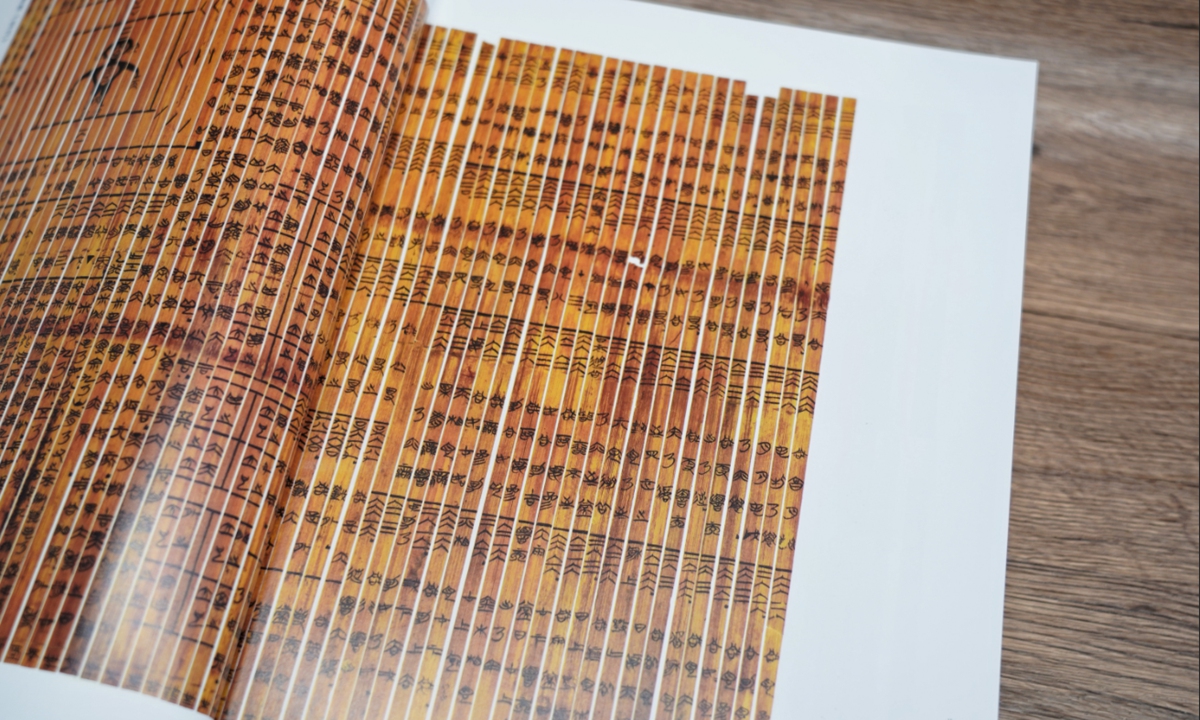
Published by the Shanghai Lexicographical Publishing House, the Dictionary of Bamboo and Silk Manuscript Studies is the world's first large-scale, authoritative lexicon to fully systematize global research on China's ancient bamboo slips, wooden tablets and silk manuscripts, the publishing house told the Global Times on Monday.
"Before paper was widely adopted, bamboo and wooden slips were China's most crucial carrier of writing, bearing the inheritance of Chinese civilization for thousands of years," Feng Shengjun, chief editor of the dictionary and vice president of the Chinese Society for the Study of Ancient Writing, told the Global Times.
"Major excavations of bamboo and silk relics have always been groundbreaking events in academic circles. By sorting out and interpreting these precious unearthed documents in a standardized dictionary form, we make the historical development of Chinese civilization clearer and more complete," Feng added, underscoring the book's foundational academic and cultural value.
The dictionary contains more than 9,000 entries and over 600 color illustrations and images. Entries cover the theory of bamboo and silk manuscript studies, excavated texts, manuscript forms and institutions, scholars and works, and preservation and research.
Before paper became widespread, bamboo and wooden slips, along with silk fabrics, were the principal writing materials in China. Originating in the early 20th century with the discovery of Dunhuang bamboo relics, the field has evolved into an internationally recognized scholarly frontier. It integrates archaeology, ancient history, legal systems, paleography, document conservation and multiple other sectors, fueled by successive landmark discoveries including the Shanghai Museum bamboo texts, Tsinghua University bamboo slips, Yuelu Academy Qin Dynasty (221BC-206BC) manuscripts and the famed Mawangdui silk documents, said the publishing house.
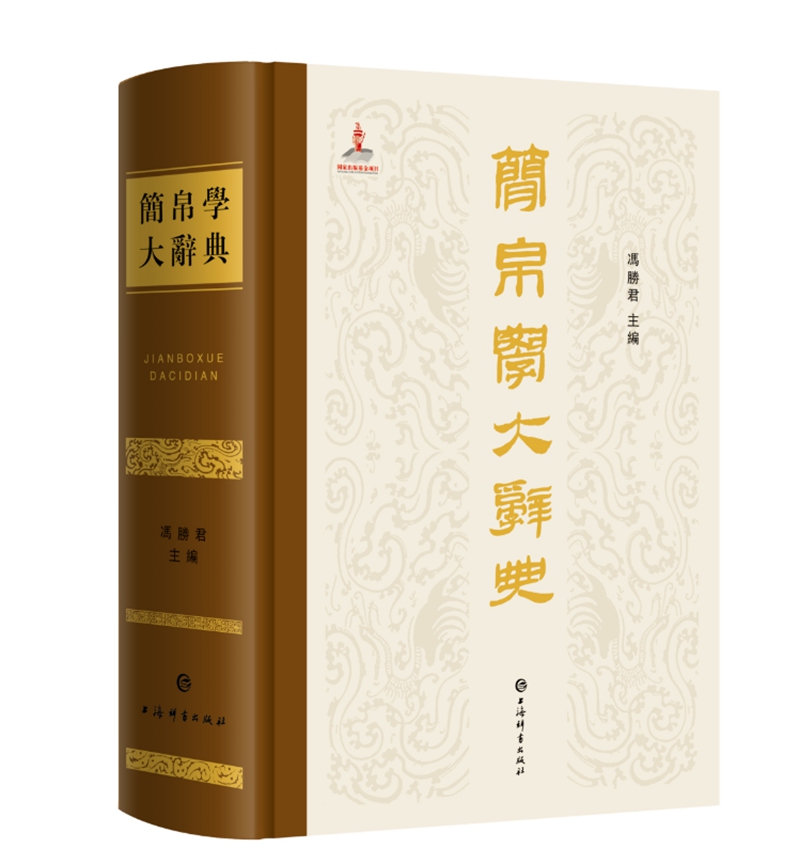
Zhao Hang, editor at the publishing house, told the Global Times that the volume comprehensively incorporates research achievements and academic works by Japanese and South Korean scholars, making it an important resource for foreign scholars who study bamboo and silk manuscripts.
It is intended for specialists, early-career researchers and general readers interested in early Chinese history. The entries range from theoretical concepts to biographies of leading scholars and descriptions of major excavation sites, with cross-references designed to help readers move across disciplines.
Feng said the volume will support research into the politics, laws, economics, military affairs, thought, science and technology, ethnic groups and social life of ancient China. It will also help standardize terminology across different scholarly traditions.
The publication is part of broader state-backed efforts to advance ancient script research and document the continuity of Chinese civilization. It aims to help make texts written more than 2,000 years ago "core material evidence" for interpreting a continuous 5,000-year Chinese civilization. For the field, it added, the dictionary is a landmark in a century of bamboo and silk manuscript studies.
。基于 AI 的系统,由 Codex 提供支持。但对于 Matthew Butterick 等开发者来说,人工智能的训练方式,已经引发了极大的争议。OpenAI 的说法是,Codex 被投喂了“数千万个公共存储库”—— 其中就包括 GitHub 上的代码 ——然而微软却含糊地将训练材料描述为“数十亿行公共代码”。Copilot 研究员 Eddie Aftandilian 在最近的播客(@ 36:40)节目中证实 —— Copilot 正在 GitHub 的公共存储库上展开训练。

B | 问题在于,GitHub 训练的这些公共存储库是经过许可的,并且在使用存储库中的代码时需要署名。另一方面,微软一直对代码的使用含糊其辞,辩称有在“合理使用”。但事实上,Copilot 不仅可以“提供建议”、甚至经常照搬全抄 —— 正如德克萨斯农工大学教授兼 GitHub 用户 Tim Davis 指出的那样。对于像 Matthew Butterick 这样处于社区意识而贡献开源代码的程序员们来说,微软正在构建一个新的花园围墙、并将妨碍程序员在传统开源社区的开拓与发现。就算往轻了说,GitHub Copilot 也会打消许多开源贡献者的念头。随着时间的推移,曾经繁盛的社区将黯然神伤,因为用户的注意力和参与度都会向 Copilot 构建的围墙迁移。那样大家会逐渐偏离开源项目本身 —— 远离他们的源码库、问题追踪报告、邮件公告列表、以及讨论板 —— 对开源社区来说,这样的能量转变、将是一个痛苦且永久的损失。
Current article:http://55huzq.zangjiwuqihuncongcherua.cyou/list_dsrf/1haugu.html
Published on:10:28:53
- 82296从环境卫生治理到全面社会健康管理——第36个爱国卫生月基层扫描
- 20138同程旅行:中秋国庆旅行产品“提前订”热度大增
- 64904Ex-Illinois child welfare worker guilty of endangerment after boy beaten to death by mom
- 47259斯基拉:恩佐正推动离队去曼城,曼城有信心1.3亿欧与切尔西谈妥
- 2385682查尔斯威廉久违同框,国王把32年指挥权交给长子,哈里听闻“泪流满面”
- 270Mudslide hits near border port in Xizang, people feared missing
- 957环法第八赛段:波加查继续领跑 两名车手因感染新冠退赛
- 6029SK海力士公布最新HBM进展 称竞争焦点从内存性能转向封装技术
- 17238伊朗外交部:尚未收到加入《麦加共同防务协议》正式邀请
- 679“肌”不可失!奥运冠军喊你加入肌肉挑战赛!
- 7234China-Laos Railway cargo tops 90 million metric ton
- 707这个新股概念多,AI+存储+PCB……| 1027 张博划重点
- 27719Nepali president tests +ve for Covid
- 948小模型赢了GPT-5.5!这家初创公司有点东西
- 6691091“甜蜜产业”助力乡村振兴
- 7948630突发!这个域名交易金额创下年度最高 .AI 域名交易纪录
- 450572结束八年德甲拜仁生涯 莱万多夫斯基牵手巴萨
- 29469韩国警方突击搜查韩足协总部,调查男足前主帅任命程序是否违规
- 625三星再获约2000万块iPhone14系列面板订单_苹果_炬光
- 305179打几分?阿迪达斯发布本赛季欧冠用球,预计下赛季将由耐克设计
- 5749028PM to visit Ayodhya on the eve of Deepawali
- 51979美国内华达州里诺市火情最新披露:凶猛火势已造成6人受伤,迫使约4.2万名当地居民紧急撤离,另有4.5万人处于撤离警告区
我的网站热门国内
- Copyright @ 2016-2017 我的网站 版权所有